
Satyanarayan Puja
- Shri Satyanarayan Puja
- Satyanarayan Katha
- Satyanarayan Purnima Puja
- Satyanarayan Griha Pravesh Puja
- Satyanarayan New Home Blessing Puja
- Satyanarayan Family Welfare Puja
- Satyanarayan Prosperity Puja
Satyanarayan Katha — सत्यनारायण कथा
Performed to express gratitude, mark a milestone, or invite protection over a household, our Satyanarayan Katha includes the full five-chapter recitation, puja, and prasad — with the story explained so everyone present follows along.
About This Katha
Satyanarayan Katha is one of the most commonly performed household pujas, often held to mark a birthday, anniversary, house-warming, recovery from illness, business success, or simply as a periodic expression of gratitude.
The Katha is conducted in a devotional, structured manner with clear chanting, aarti, and flexible arrangements for family groups or smaller gatherings.
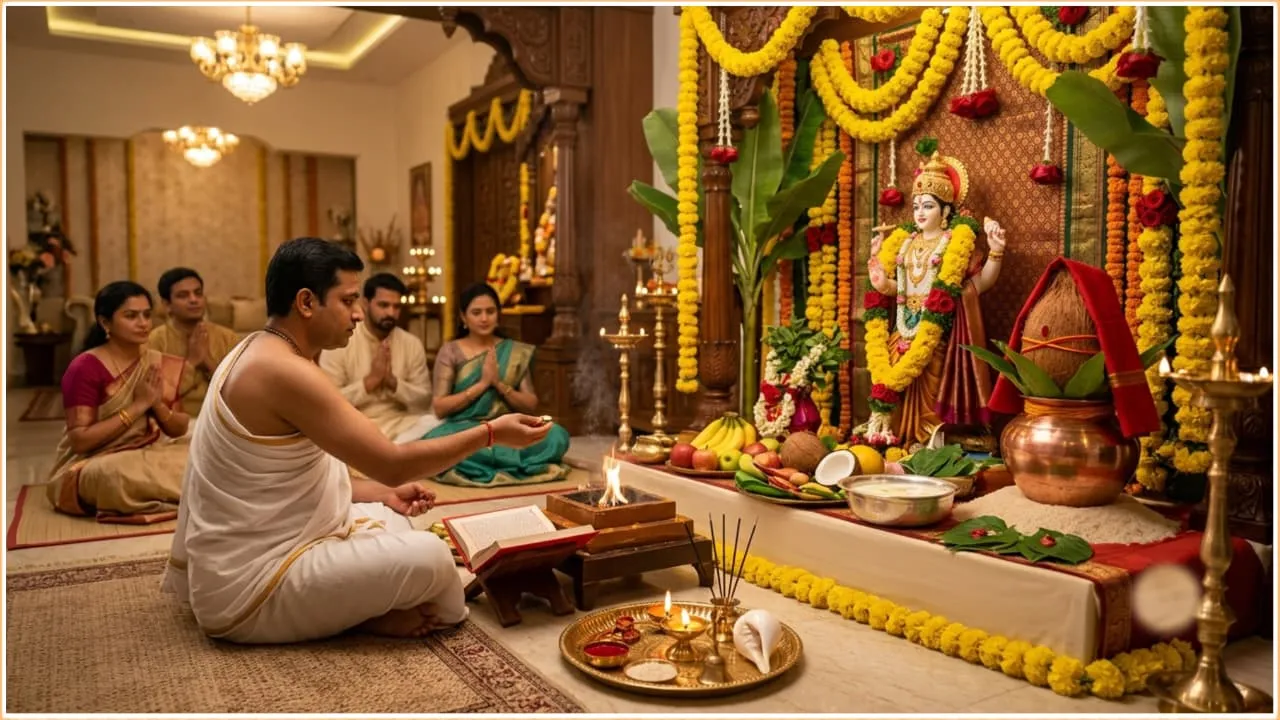
The ceremony includes the panchamrit abhishek, the five-chapter Katha recitation, aarti, and distribution of the signature prasad (sheera/halwa) to all those present.
All key pujas and rituals for Lord Satyanarayan and Lord Vishnu, presented in a premium, easy-to-scan format.
Service at a Glance
A quick summary before you book; full details confirmed on call.
Around 2-3 hours for the full five-chapter Katha with abhishek and aarti.
Most commonly performed at your home; also available at our Wadala centre.
Ideal for family and friends gatherings — any size, with prasad planned accordingly.
Katha recited in Sanskrit/Hindi with a simple retelling so all guests can follow the story.
Panchamrit, banana leaves, and puja items arranged by us; prasad ingredients discussed with you.
Based on group size and whether prasad preparation is included — confirmed before booking.
Why This Puja Matters
Reasons families typically book a Satyanarayan Katha.
Commonly performed after a wish is fulfilled — a job, a marriage, recovery from illness, or a safe journey.
A popular way to mark birthdays, wedding anniversaries, or other family milestones with a shared ritual.
Often performed together with a Griha Pravesh Puja to bless a newly occupied home.
Performed to express thanks after a business milestone, contract, or financial recovery.
The shared recitation and prasad distribution make it a natural occasion for family and friends to gather.
Many families repeat this Katha every year or every few months as an ongoing practice.
What's Included
Confirm group size and any additions with us on call.
Inside the Ritual
The traditional structure we follow for this recitation.
The occasion and your intention are stated, followed by a brief invocation to Lord Ganesh before the main Katha begins.
Lord Satyanarayan (a form of Vishnu) is bathed with the five sacred substances — milk, curd, honey, ghee, and sugar.
The complete story is recited across its five chapters, each carrying a lesson about faith, gratitude, and consequence — narrated so guests can follow along.
A closing aarti is performed with lit lamps, usually with all guests joining in the singing.
The signature sheera/halwa prasad, prepared with banana and semolina, is distributed to everyone present as the final step.
The Pandit shares any specific guidance relevant to your occasion before concluding the session.
Getting Ready
A general checklist to help the session run smoothly.
How It Works
Named after the four kundli houses most relevant to gratitude and gathering.
Share your occasion, expected guest count, and preferred date.
We recommend a suitable date and time and confirm the samagri and prasad plan.
The Katha is recited in full with abhishek, aarti, and prasad distribution.
We're available for any questions on prasad or a repeat Katha next year.
Questions, Answered
The full five-chapter recitation with abhishek and aarti typically takes around 3 hours, depending on group size and any additions.
We guide your household on preparing the prasad (sheera), or can arrange it as part of the booking if you prefer — let us know when booking.
Yes, this is a common combination. Let us know when booking and we'll plan both rituals into one visit.
It's traditionally associated with the full moon (Purnima), but can be performed on any day that suits your occasion.
There's no fixed limit — let us know your expected guest count so we can plan seating and prasad quantity accordingly.
The core recitation is in Sanskrit/Hindi, but we're happy to explain each chapter's meaning in English as we go, especially useful if younger family members are attending.
Prasad is traditionally shared with everyone present and not discarded. We can advise on quantity planning so very little is left over.